


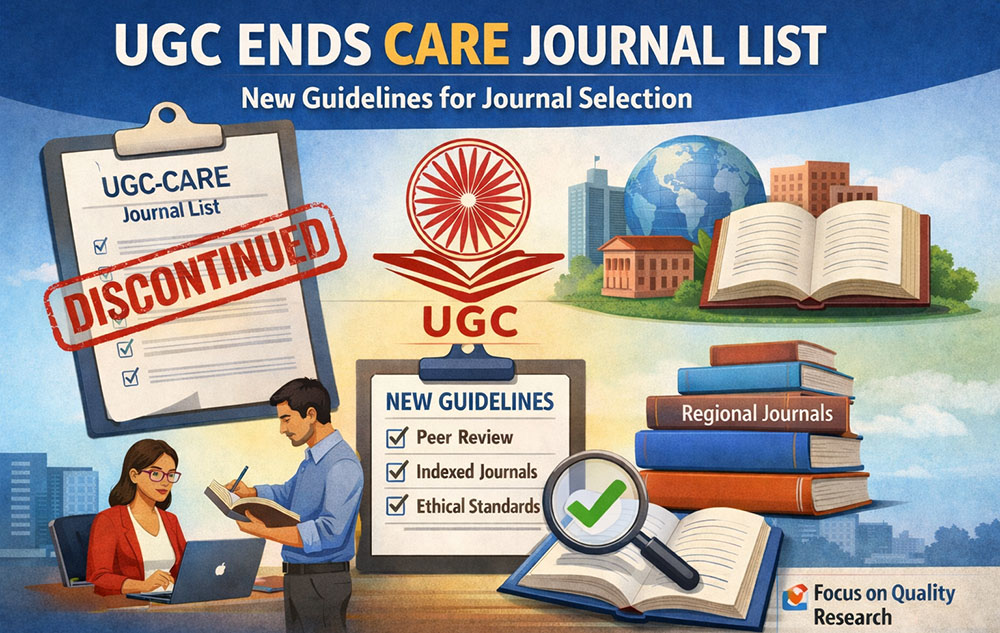
UGC Ends CARE Journal List: New Journal Selection Guidelines to Improve Research Quality in India (2025 Update)

The University Grants Commission has made a change in the way academics publish their work in India. They are stopping the UGC-CARE journal list. Now the University Grants Commission is coming up with rules, for picking academic journals. These new rules are meant to make research better make things more open and give researchers options for where they want to publish their research. The University Grants Commission wants to make sure research is good and people can see what is going on. The University Grants Commission is giving researchers freedom to choose where they publish their work.
This decision marks a significant shift for PhD scholars, faculty members, and higher education institutions that previously depended on the UGC-CARE list to fulfil academic and promotional requirements.
UGC’s New Approach: From Fixed Journal List to Flexible Guidelines
For a time researchers had to put their work in special books called journals that were on the UGC-CARE list. The people in charge made this list to help good research get noticed and to stop people from publishing fake things.. Over time a lot of people started to complain about this list. The UGC-CARE list was supposed to help researchers do work and publish it in good journals but it had some problems that made people unhappy, with the UGC-CARE list.
The University Grants Commission will not have a list of good journals anymore. Now it will give some rules and standards to help the universities and colleges and the people who do research find the journals that’re good and honest and where other experts check the work before it is published. This way the University Grants Commission wants to help people find the journals.
This change encourages scholars to focus more on journal credibility and relevance rather than simply relying on inclusion in a predetermined list.
Key Changes and Their Impact
1. Greater Academic Freedom for Researchers
The removal of the UGC-CARE list allows researchers to choose journals based on quality and subject relevance. Many reputed international and regional journals that were previously excluded can now be considered for publication.
2. Focus on Research Quality and Transparency
The new guidelines aim to:
-
Encourage high-quality academic research
-
Promote ethical publishing practices
-
Ensure clarity and transparency in journal evaluation
-
Reduce dependence on fixed journal databases
Researchers will now be expected to critically assess journals for peer review, indexing, editorial standards, and publication ethics.
3. Increased Role of Universities and Institutions
Higher education institutions will have more control in developing their own systems to evaluate journal credibility. Universities can set criteria based on disciplinary needs while aligning with UGC’s broader standards.
4. Public Feedback Opportunity
UGC has opened its draft guidelines for public consultation until February 25, 2025. Faculty, researchers, students, and institutions are invited to share their suggestions to refine the policy before final implementation.

Why Was the UGC-CARE Journal List Discontinued?
The UGC-CARE list was started in 2018 to keep the UGC-CARE list from bad people and stop fake journals from growing.. The UGC-CARE list had some big problems that came up:
Limited publishing options for researchers
Lack of transparency in journal inclusion and removal
Exclusion of reputed journals, especially in Indian regional languages
Concerns about bias toward certain publishers
Difficulty in keeping the list updated with emerging journals
To address these issues, UGC decided that open guidelines would create a more inclusive and fair research environment.
Benefits of the New Journal Selection Policy
More Flexibility
Researchers can publish in high-impact and credible journals beyond a restricted list.
Higher Research Standards
Scholars must adopt better evaluation practices when selecting journals, improving academic output.
Inclusion of Regional and Emerging Journals
Quality journals in local languages and newer reputable journals can now receive recognition.
Reduced Risk of Predatory Publishing
By focusing on journal ethics and indexing standards, institutions can better filter out fake or low-quality publications.